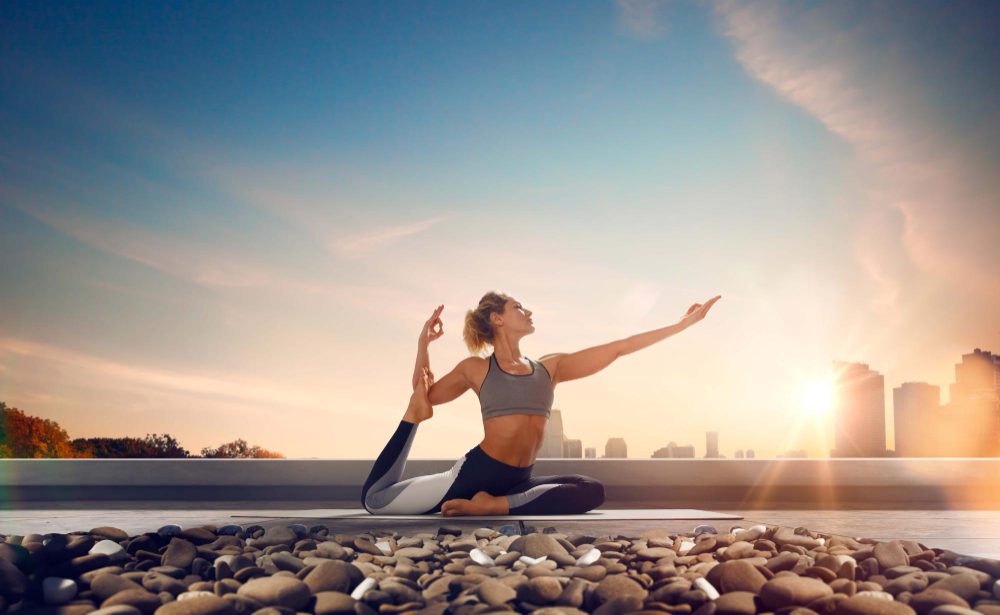
Are you on a quest for a transformative yoga practice that challenges your body, enriches your mind, and nurtures your spirit? Welcome to the world of Ashtanga Yoga, a dynamic and physically demanding style of yoga. Ashtanga Yoga isn’t just a physical exercise; it’s a path to overall well-being that’s making waves in yoga communities worldwide, from Seattle to Berlin, Howard County to DC, Portland to Philadelphia, Austin to Asheville, and Eugene.
Ashtanga form is a vigorous and physically challenging style of yoga that emphasizes coordinating breath with a sequence of poses. Sri K. Pattabhi Jois created this practice in the early 1900s, and it has become popular worldwide for its transformative impact on both the body and mind. In this extensive manual, we will delve into the principles and advantages of Ashtanga form, while also offering a step-by-step breakdown of the primary series. Whether you are a novice or a seasoned yogi, this manual will prove to be a valuable tool for deepening your comprehension and application of Ashtanga Yoga.
Ashtanga form is an active and strenuous style of yoga that emphasizes coordinating breath with a sequence of poses. It is renowned for its strict and structured approach, which can aid individuals in achieving equilibrium and power both during and outside of practice. In this blog entry, we will delve into the different facets of Ashtanga asanas and the advantages it can provide to those on their path to physical and mental health.
The Essence of Yoga: A Multifaceted Journey
Yoga, with its roots deeply embedded in India, offers a multifaceted journey that encompasses the physical, mental, and spiritual dimensions of life. It spans a multitude of schools, practices, and objectives, entwined with Hinduism, Buddhism, and Jainism. Among the well-recognized forms of yoga are Hatha yoga and Raja yoga.
Yoga‘s origins can be traced back to pre-Vedic Indian traditions, but it is thought to have truly taken form around the sixth and fifth centuries BCE. This evolution occurred within India’s ascetic and śramaṇa movements. While the chronology of the earliest texts describing yoga practices remains uncertain, they are attributed to various sources, including Hindu Upanishads and the Buddhist Pali Canon.
Patanjali, a prominent figure in the history of yoga, laid down the fundamental definition of yoga. He succinctly described it as “the inhibition of the modifications of the mind,” which Swami Vivekananda paraphrased as “restraining the mind-stuff from taking various forms.” In simpler terms, yoga leads to a serene mind, revealing the true Self or seer, anchoring it in its intrinsic and fundamental nature.
Discovering Strength and Balance Through Ashtanga Yoga
Do you yearn for a practice that challenges your body, sharpens your mind, and fortifies your spirit? Look no further than Ashtanga asanas.
Ashtanga asanas is a dynamic and physically demanding yoga style that revolves around synchronizing your breath with a meticulously crafted series of postures. This practice was born in the early 20th century, developed by K. Pattabhi Jois, and has since become a global phenomenon, offering holistic benefits that extend far beyond the mat.
Understanding Ashtanga Yoga
At the heart of Ashtanga asanas lies a specific sequence of postures known as the Primary Series. This sequence is meticulously designed to purify both your body and mind through a combination of physical postures, controlled breath, and meditation. As you progress through this sequence, you’ll encounter a rich variety of standing, seated, and finishing postures, each elegantly linked by the flowing movement known as vinyasa.
Ashtanga asanas is often referred to as “power yoga” due to its physically demanding nature. It requires strength, flexibility, and an unwavering focus as you navigate through the sequence with grace and control. The dynamic union of breath and movement is the essence of yoga flow, and it’s what propels you towards yoga strength, yoga wellness, and yoga balance.
The Benefits of Ashtanga Yoga
Ashtanga Yoga offers a wealth of benefits that nurture both your body and mind. Here are some of the most prominent advantages of this dynamic practice:
1. Enhanced Strength and Flexibility:
Ashtanga asanas delivers a full-body workout that targets all major muscle groups. This leads to increased strength and flexibility, resulting in a more toned and balanced physique.
2. Elevated Focus and Concentration:
Synchronizing your breath with movement requires intense concentration. This not only improves your focus and mental clarity on the mat but extends to your daily life.
3. Stress Relief:
The physical and mental challenges presented by Ashtanga asanas can release tension and stress from your body. The practice also incorporates meditation and breathwork, adding a calming effect to your mind.
4. Improved Breathing:
Ashtanga asanas places a strong emphasis on deep, controlled breathing. This can significantly enhance your lung capacity and overall oxygenation, resulting in increased energy and vitality.
5. Cleansing and Detoxifying:
he Primary Series of Ashtanga asanas is purposefully designed to cleanse both body and mind. The combination of postures, breathwork, and the heat generated through practice helps eliminate toxins, promoting overall health and well-being.
Ashtanga Yoga in Diverse Cities
Ashtanga asanas isn’t confined to a single location; it’s a global phenomenon. Communities in Seattle, Berlin, Howard County, DC, Portland, Philadelphia, Austin, Asheville, and Eugene have embraced this practice wholeheartedly. There’s a plethora of studios and teacher training programs to cater to the growing community of Ashtanga enthusiasts.
- Seattle:Seattle boasts a variety of studios that offer Ashtanga asanas classes suitable for practitioners of all levels. Prominent choices include Shakti Vinyasa Yoga, The Grinning Yogi, and Seattle Ashtanga Yoga.
- Berlin:In Berlin, Ashtanga asanas has carved a niche for itself with studios like Ashtanga Yoga Berlin, Ashtanga asanas Room, and Ashtanga asanas Kreuzberg. These studios provide a sense of community and support, making it an ideal place to explore the practice of Ashtanga asanas.
The Journey Towards Balance and Strength
Ashtanga is n’t just about physical prowess; it’s a holistic practice that empowers you in numerous ways:
Find a Certified Teacher:
Ashtanga is physically demanding, so it’s crucial to learn from a certified teacher who can safely guide you through the postures.
Start Gradually:
Ashtanga can be challenging, especially for beginners. Start at your own pace, listen to your body, and don’t push yourself too hard. It’s perfectly acceptable to take breaks when needed.
Consistency is Key:
Ashtanga is most effective when practiced regularly. Even if it’s only a few times a week, establishing a consistent routine is vital.
Practice Patience:


FACTS AND DATA
According to Ian Whicher, the status of ananda and asmita in Patanjali’s system is a matter of dispute.
https://en.wikipedia.org/wiki/Ashtanga_(eight_limbs_of_yoga)
According to Maehle, the first two constituents, deliberation and reflection, form the basis of the various types of samapatti.
https://en.wikipedia.org/wiki/Ashtanga_(eight_limbs_of_yoga)
Asamprajnata Samadhi, also called Nirvikalpa Samadhi and Nirbija Samadhi,[j] is meditation without an object, which leads to knowledge of purusha or consciousness, the subtlest element.[k] Soteriological goal: Kaivalya[edit] According to Bryant, the purpose of this is liberation from suffering, caused by entanglement with the world, by means of discriminative discernment between Purusha, the witness-consciousness, and prakriti, the cognitive apparatus including the muddled mind and the kleshas.
https://en.wikipedia.org/wiki/Ashtanga_(eight_limbs_of_yoga)