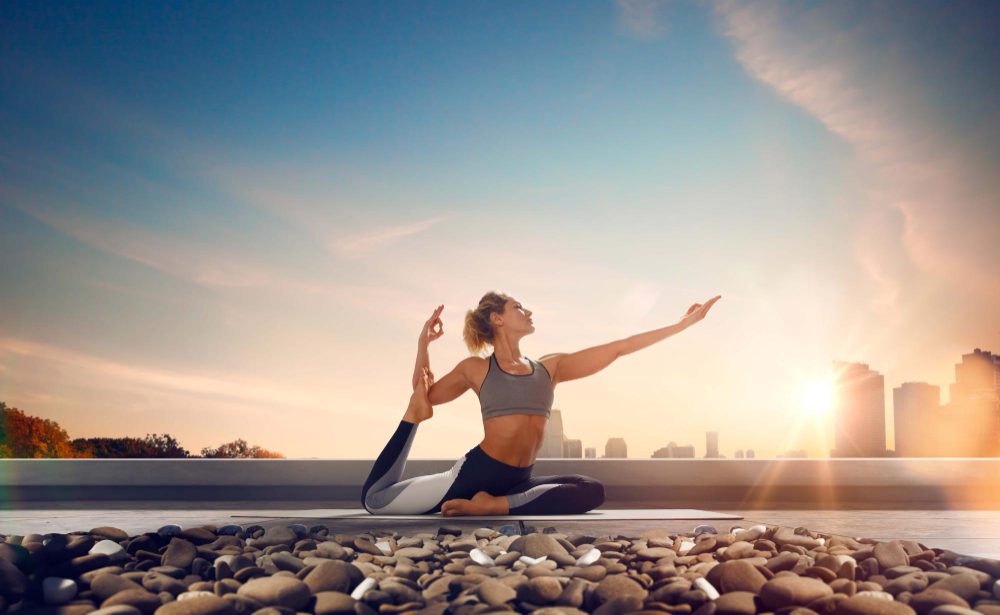
Yoga is a deeply personal practice that allows you to connect with your body, mind, and breath. But what happens when you bring another person into the mix? Enter yoga poses for 2 , a beautiful extension of the traditional practice that adds an element of trust, cooperation, and shared experience to the mat.
Partner yoga, also known as acro-yoga, is not just about mastering complex moves—it’s about creating harmony by synchronizing breath and movements with a friend or loved one. Whether you’re looking to invigorate your relationship, or just desire a unique fitness experience, partner yoga can be a transformative journey, both physically and emotionally. In this comprehensive guide, we’re going to explore 10 easy yoga poses for 2 people that can bring you closer to your partner, both figuratively and literally.
The Benefits of Practicing Easy and Extreme Yoga Poses for 2 with a Partner
Yoga is commonly associated with inner peace and solitude, but there are numerous advantages to practicing it within a partnership. Partner yoga encourages communication, listening skills, and the ability to be present. It requires trust and a willingness to let go of control, which can parallel the dynamics of a healthy relationship outside the yoga studio. Physically, it can deepen stretches, enhance balance, and provide additional support for challenging poses.
When contemplating why you should try partner yoga, consider the following benefits:
- Enhanced Poses:
In partner yoga, one person often grounds while the other uses different parts of the body to stretch deeper into the asana. This creates a dynamic where each partner can experience a pose more fully than when alone.
- Shared Energy and Support:
Yoga with a partner can lead to an energetic boost, as you share and feed off each other’s motivation. It’s also an opportunity to provide and receive support in poses you wouldn’t be able to do solo.
- Stronger Connection:
The combination of touch, eye contact, and shared breath can promote an increased feeling of connection and unity, fostering a deeper emotional bond between partners.
- Conscious Communication:
Partner yoga relies heavily on verbal and non-verbal communication, which can translate to better communication in everyday life.
Understanding Yoga Poses For 2 hard Dynamics
Before diving into the easy and hard yoga poses for 2, it’s essential to understand the dynamics at play during a partner yoga session. The key elements are communication, support, and the concept of ‘yin and yang’.
Mastering Communication in partner yoga
Success in yoga poses for 2 beginners relies on clear communication. This doesn’t mean just speaking but also listening attentively. Effective communication helps partners know when to adjust a pose, when to deepen a stretch, and when to dial back the intensity to prevent injury and ensure a comfortable experience.
Sharing the Load in yoga pose for 2
In yoga poses for 2 , there’s often one person in a ‘base’ position, providing a stable foundation, and another in a ‘flyer’ or ‘mover’ position, using the base for support. Both partners share the load of the pose, but in different ways in doing hardest yoga poses for 2. This shared effort embodies the concept of teamwork that can greatly impact your partnership off the mat.
Balancing Yin and Yang in partner yoga
In the context of partner yoga, ‘yin and yang’ describe the partnership of doing and allowing. The person in the ‘doing’ role leads the movement, while the other allows their body to be moved. This interplay showcases the importance of balance in relationships and can be a powerful metaphor for maintaining harmony in your partnership.
Now, let’s embark on mastering ten easy yoga poses for 2 that you can incorporate into your routine, regardless of your level of experience.
Pose 1: Seated Forward Fold
Understanding the yoga Pose for 2
In seated forward fold, one partner sits with their legs extended, while the other partner bends at the waist to place their back against the legs of the first partner with their feet on the ground. The sitting partner then holds the hands of their standing partner, who can fold forward into a gentle stretch
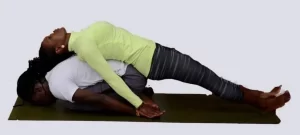
Credit https://www.blueosa.com/best-yoga-poses-for-two-people/
Benefits of Seated Forward Fold
- For the Folded Partner:
This pose offers a deep stretch for the hamstrings and lower back, as well as a mild inversion that can be restorative for the body.
- For the Supporting Partner:
The sitting partner receives a mild backbend, and, depending on flexibility, can also feel a stretch in the shoulders and upper back.
Difficulty Level and Modifications
This is a beginner-friendly pose that you can adjust for different levels of flexibility. The seated partner can bend their knees slightly to accommodate a tight hamstrings, or the standing partner can choose to bend their knees during the forward fold.
Pose 2: Double Downward Dog
Understanding the yoga Pose for 2 hard
Both partners start in a traditional downward-facing dog position. The person who will be the ‘base’ extends their arms farther forward, while the ‘flyer’ places their feet on the base’s low back or hips
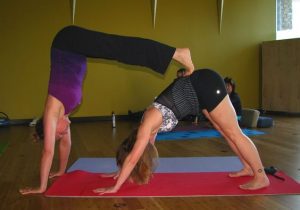
Credit https://in.pinterest.com/pin/433823376576786408/
Benefits of Double Downward Dog
- For Both Partners:
This pose offers a full-body stretch, strengthening for the upper body, increased flexibility in the hamstrings and calves, and a sense of support that can be calming and reassuring.
Difficulty Level and Modifications
Double Downward Dog is slightly more challenging due to the balancing required. It’s crucial to communicate throughout the pose to ensure both partners feel comfortable. Beginners can perform the pose with knees slightly bent to reduce strain.
Pose 3: Standing Backbend
Understanding the yoga Pose for 2
In this pose, both partners stand facing each other and hold hands. As one partner leans backward, the other leans forward to create a synchronized backbend, with the supporting partner holding the weight of the leaning partner’s body.
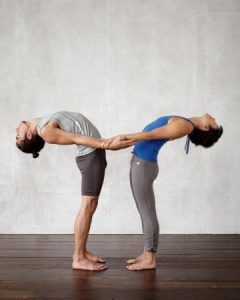
Credit https://in.pinterest.com/pin/ARl4w182Kw8IoJRwVG4IrviiH5iiaf70yyPPAIc-zh7DCoQKmzek3Lc/
Benefits of Standing Backbend
- For the Bending Partner:
This offers a deep stretch along the front of the body while also strengthening the back muscles and improving flexibility in the spine.
- For the Supporting Partner:
The supporting partner will also benefit from the strengthening of their own back and the stretch in the arms.
Difficulty Level and Modifications
This is a beginner pose, but caution should be taken with the depth of the backbend. Beginners can do a less intense backbend while still reaping the benefits. Ensure that both partners are comfortable and ready to perform the pose before leaning back.
Pose 4: Supported Tree Pose
Understanding the yoga Pose for 2 hard
One person stands in tree pose with the sole of one foot against the inner thigh of the other, while the other partner stands facing and supporting the extended leg of the tree pose practitioner at the ankle or calf.
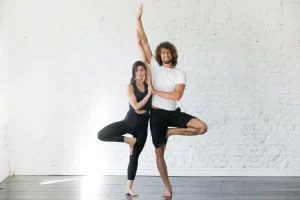
Benefits of Supported Tree Pose
- For the Balancing Partner:
This offers an excellent opportunity to work on balance and focus, as well as a hip-opening stretch that is especially beneficial when partnered with another.
- For the Supporting Partner:
The supporting partner will work on their standing balance and experience a slight shoulder and arm workout from holding the extended leg.
Difficulty Level and Modifications
This pose is of moderate difficulty, and modifications include using a lower part of the extended leg for the supporting partner to hold onto. If balance is an issue, the balancing partner can maintain a light touch against a wall or use the partner’s shoulder or hand for grounding.
Pose 5: Partner Boat Pose
Understanding the yoga Pose for 2
Facing each other, both partners sit down and extend their legs. Holding hands, each lean back, lifting their legs and bringing the soles of the feet to touch, creating a ‘V’ with their bodies.
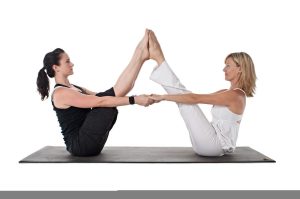
credit https://in.pinterest.com/pin/550916966912925515/
Benefits of Partner Boat Pose
- For Both Partners:
This pose strengthens the core, hip flexors, and quads. It also provides a unique way to test and improve your partner’s balance in a fun and supportive manner.
Difficulty Level and Modifications
This pose is challenging for beginners due to the core strength required. You can modify by keeping the feet on the ground instead of lifting them, or by having the partners hold each other’s wrists instead of hands.
Pose 6: Double Plank
Understanding the yoga Pose for 2
Both partners start in a plank position facing each other, with their feet grounded and hands holding. This balanced position provides a unique challenge that strengthens the core, arms, and shoulders.
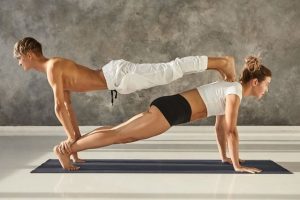
Benefits of Double Plank
- For Both Partners:
This pose offers a full-body workout, especially for the core, arms, and shoulders. It also fosters a sense of teamwork and shared effort.
Difficulty Level and Modifications
Double plank is an intermediate pose that can be intense. Beginners may need to start with their knees on the ground, or with the base holding the partner’s ankles while in plank position.
Pose 7: Partner Child’s Pose
Understanding the yoga Pose for 2
One partner starts in child’s pose, sitting back on their heels with arms extended forward. The other partner will sit with their back against the first partner’s, leaning back to rest their head on the first partner’s lower back, arms along the sides of their body.
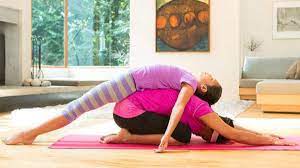
Benefits of Partner Child’s Pose
- For the Leaning Partner:
Partner child’s pose provides a gentle stretch for the upper back, shoulders, and lower back. It can also be a grounding and restorative pose.
- For the Supporting Partner:
The supporting partner will receive the additional weight of the leaning partner, which can help to deepen their own child’s pose.
Difficulty Level and Modifications
This is a relatively easy pose, but if the supporting partner experiences discomfort, they can vary the amount of pressure by leaning back more or less. Communicate clearly to ensure both partners feel comfortable and supported.
Pose 8: Double Pigeon
Understanding the yoga Pose for 2
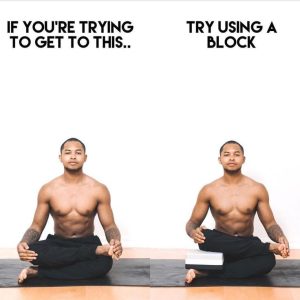
Both partners sit facing each other with their legs crossed in front of them. Each partner will then place their outside foot on the opposite knee for a gentle hip opener.
Benefits of Double Pigeon
- For Both Partners:
Double pigeon is a great way to open up the hips, which can be especially therapeutic for those who sit a lot during the day. This pose also encourages both partners to focus on their breathing and provides the opportunity for a shared moment of relaxation.
Difficulty Level and Modifications
This pose is beginner-friendly, but modifications include using a cushion under the hips for support or taking breaks to vary the intensity of the stretch.
Pose 9: Wheelbarrow
Understanding the yoga Pose for 2
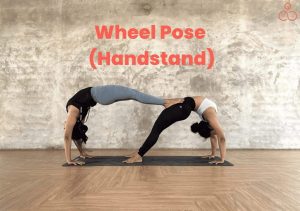
The base partner starts in a squat position, hands on the ground, while the flyer partner places their hands on the base’s ankles. The flyer then extends their legs out behind them, creating a straight line from head to toe.
credit yogic-experience.com/yoga/best-bff-2-person-yoga-poses/
Benefits of Wheelbarrow in yoga poses for 2 people
- For the Base Partner:
The base will benefit from a leg workout and core strength challenge, as they maintain the squat position while supporting the weight of the flyer’s legs.
- For the Flyer:
Wheelbarrow provides a unique full-body stretch and strength sequence that can be invigorating and fun.
Difficulty Level and Modifications
This is an intermediate pose that requires both partners to have a certain level of strength and flexibility. Modifications include the base partner slowly standing up as comfort allows, or the flyer bending their knees to place their feet flat on the ground behind them.
Pose 10: Double High-Five Pose
Understanding the yoga Pose for 2
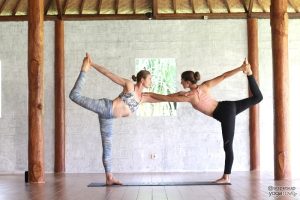
Both partners stand facing each other and raise one leg, bringing the soles of their feet to meet. Holding each other’s hands, lean back slightly to create a counterbalance—keeping the core engaged and the gaze forward.
credit yogarove.com/yoga-poses-for-two-people/
Benefits of Double High-Five Pose in doing easy yoga poses for 2
- For Both Partners:
This fun and simple pose provides an engaging way to work on balance, strength, and teamwork. It’s an excellent way to end a partner yoga session with positivity and a sense of shared accomplishment .
Difficulty Level and Modifications
This pose is beginner-friendly and can be intensified by slightly leaning back to engage the core more. However, caution should be taken to ensure both partners feel stable during the pose.
Conclusion
The practice of yoga poses for 2 can bring numerous benefits to your life, both as a unique fitness activity and as a way to deepen the connections with your partner or friend. By trying these ten poses, you’ll embark on a journey of shared movement, increased trust, and communication that can uplift your overall well-being and relationship dynamics. Remember to approach each pose with an open mind, clear communication, and readiness to support and be supported. Whether you’re a committed yogi or just starting your fitness journey, partner yoga is an enriching experience well worth exploring.
In order to gain the full benefits of this guide, take your time to understand and practice each yoga poses for 2 as you progress. It’s not just about reaching the end position but enjoying the entire experience with your partner. For further exploration, consider finding a local yoga class that offers partner yoga, or even join a community dedicated to acro-yoga.
Unlock the potential of your practice and relationship through the balance, support, and shared intensity through yoga poses for 2.
Different Yoga poses for 2 can be assessed on in.pinterest.com
FAQ
Q. What are Yoga poses for 2 beginners ?
Ans. Some great yoga poses for two beginners include:
- Seated Forward Fold
This pose is perfect for stretching your hamstrings and lower back. Sit facing your partner with your legs extended straight out in front of you. Hold onto each other’s hands and slowly fold forward while keeping your backs flat. You can also use your partner’s feet as a support for your head.
- Double Downward Dog
The Downward Dog pose is a staple in any yoga practice, and practicing it with a partner can make it even better. Begin by facing each other on all fours, then lift your hips up into the air while pressing your hands into the mat. Your partner should do the same, and you can use each other’s backs for support.
- Tree Pose
This pose is all about balance, and having a partner to hold onto can make it easier. Stand facing each other with your feet hip-width apart. Shift your weight onto one leg and bring the sole of your opposite foot to rest on the inside of your standing leg’s thigh. Hold hands with your partner for extra support and balance.
- Seated Twist
This pose is perfect for releasing tension in the spine and improving digestion. Sit back-to-back with your partner, cross-legged on the floor. Inhale and lengthen your spine, then twist to one side as you exhale. Use your partner’s back for support and hold onto each other’s arms for a deeper stretch.
- Partner Boat Pose
This pose is an excellent way to build core strength and trust with your partner. Sit facing each other with your knees bent, feet flat on the floor. Hold onto each other’s hands and slowly lift your legs off the ground while keeping your backs straight. Try to hold this pose for a few breaths before gently lowering back down
Additional tip: Don’t be afraid to experiment and try out different variations of these poses with your partner. Each person’s body is unique, so what works for one may not work for the other. Have fun and find what feels good for both of you! Happy practicing! So why not give it a try and see how practicing
Q. What is 2 person yoga called?
Ans. 2 person yoga is also known as partner yoga, couples yoga, or acro-yoga. This form of yoga involves two people performing poses together with the help of each other’s bodies for balance and support. It can be a fun and challenging way to deepen your practice and bond with a partner or friend.
Partner yoga often involves communication, trust, and teamwork
Q. What is pair yoga?
Ans.
Pair yoga, also known as partner or acro-yoga, is a physical practice that involves two individuals working together to perform various yoga poses. It combines the principles of traditional yoga with elements of acrobatics and Thai massage.
The origin of pair yoga can be traced back to ancient Indian yoga traditions, where it was practised as a way to deepen connections between partners
Q. What are Yoga poses for 2 friends?
Ans.
Here are some fun and beneficial yoga poses for two friends to try:
- Partner Tree Pose – Stand side by side facing opposite directions, reach for each other’s hands and lift one leg off the ground, placing the sole of your foot against your inner thigh. This pose requires balance and trust between partners.
- Double Downward Dog – Begin in a downward dog pose facing each other with your feet touching. Take turns lifting one hand off the ground and reaching towards your partner, while keeping your core engaged.
- Partner Boat Pose – Sit facing each other with your feet touching, hold hands and lean back until you are both in a v-shape with your legs straight. This pose strengthens the core muscles and requires communication and coordination between partners.
- Seated Forward Fold – Sit facing each other with your legs extended straight out, reach for each other’s hands and slowly fold forward, keeping your backs straight. This pose stretches the hamstrings and lower back while also promoting a sense of trust between partners.
- Double Half Lord of the Fishes – Sit back to back with your legs crossed, reach for each other’s opposite hand and twist towards the side where your feet are touching. This pose helps improve flexibility in the spine and promotes a sense of connection between partner.
Q. What are yoga poses for 2 kids?
Ans. Yoga has numerous benefits for children, both physically and mentally. It helps to improve their flexibility, strength, and balance while also promoting relaxation and reducing stress. Practicing yoga with a partner can also enhance social skills such as communication, teamwork, and trust. It can also improve concentration and focus, leading to better academic performance
- Double Downward-Facing Dog: This pose is a fun variation of the classic downward-facing dog posture. Stand facing each other with arms stretched out towards the ground and hands placed on the floor. Walk your feet back until you are in an inverted “V” position. Slowly walk towards each other, maintaining the pose and then high-five in the middle before walking back to your original position.
- Seated Back-to-Back Twist: Sit cross-legged with your backs touching each other. Hold onto your partner’s hands and twist your upper body to one side while they twist to the other side. Hold for few seconds, then switch sides. This posture enhances flexibility and stimulates.
- Partner Boat Pose: Sit facing your partner, bend your knees and lift your feet off the ground. Extend your arms and hold onto your partner’s hands. Then, straighten your legs so that the soles of your feet touch. This pose strengthens the core and enhances balance.
- Child’s Pose with Backbend: One partner gets into the Child’s Pose by kneeling on the floor and sitting back on their ankles, forehead on the floor. The other partner carefully steps over them and bends back until their back is resting on their partner’s back. This pose aids in relaxation and spinal flexibility.
Q. What are types of partner yoga?
Ans.
- AcroYoga: This type of partner yoga incorporates acrobatic movements, along with traditional yoga poses. It requires a base and flyer, where the base provides support to the flyer while performing various poses in the air. This form not only requires strength and balance but also trust and communication between partners.
- Thai Yoga Massage: Also known as “lazy yoga”, this form focuses on gentle stretches and massages between partners. It promotes relaxation, stress relief, and can be a great way to improve flexibility.
- Partner Vinyasa Flow: Similar to traditional vinyasa flow, this type of partner yoga involves synchronizing breath and movement between partners. It requires coordination and trust, as both partners flow through the poses together.
- Partner Restorative Yoga: This form is all about relaxation and releasing tension in the body. Partners support each other in restorative poses